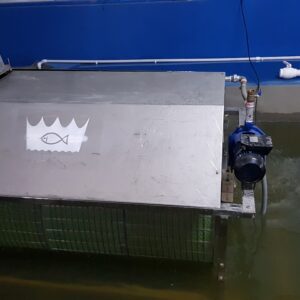
Description
What Is a Venturi Aerator? An Overview of Function, Applications, Technical Specifications, Pricing, and Purchase
A Venturi aerator is a device used to increase dissolved oxygen levels in water; it operates based on the Venturi effect and the creation of a pressure differential within the water flow path. By utilizing the water flow to create a low-pressure zone, the device draws air into the water stream, facilitating the mixing of air and water.
Proper aeration is crucial in many systems—particularly fish and shrimp farming ponds, aquaculture basins, wastewater treatment plants, and certain water recirculation systems. The correct selection of a Venturi aeration device should be based on parameters such as water flow rate, pressure, tank volume, water depth, and oxygen requirements.
What is a Venturi aerator, and how does it work?
The operating principle of a Venturi aerator is based on the phenomenon known as the Venturi effect. In this system, water enters a specific channel where the diameter narrows at a certain point. This reduction in cross-sectional area increases the water flow velocity, thereby lowering the pressure at the constricted section (the throat).
This pressure difference creates conditions that draw air into the device through an air inlet. The air and water then mix within the mixing zone, and the resulting flow—containing air bubbles—is directed toward the outlet.
Consequently, oxygen from the air is transferred into the water, increasing the dissolved oxygen level.
Thus, the device’s performance depends on three key factors: water flow, the pressure generated by the pumping system, and the proper design of the Venturi channel.

How is the capacity of a Venturi aeration system determined?
Selecting the appropriate capacity for a Venturi aeration system depends entirely on project-specific conditions. Factors such as water volume, pond depth, water temperature, the type and density of aquatic species, oxygen requirements, and pump specifications must be evaluated.
For instance, the aeration requirements for a high-density fish farming pond differ significantly from those of a small tank with a low organic load.
Furthermore, the Venturi capacity should not be selected in isolation from the pump. The system requires a pump capable of delivering the necessary flow rate and pressure; using a pump with unsuitable pressure or flow characteristics can impair system performance and increase energy consumption.
Venturi Aerator Installation
The installation method can significantly impact the device’s performance. The Venturi is typically installed in the water pipeline downstream of the pump to ensure the water enters with the appropriate pressure and flow rate.
Factors such as pipe diameter, the number of elbows, pipeline length, lift height, and pressure drop must be considered during system design.
The air intake line should also be as short as possible and free of obstructions. Blockages in the air line can reduce suction capacity and, consequently, aeration performance.
During installation, the direction of water flow must align with the direction indicated on the device.
Advantages of the Venturi Aeration Device
One of the key features of Venturi aeration is its relatively simple design. The device can introduce air into the water using the energy of the water flow itself, without the direct use of an air compressor.
Other advantages include its versatility across various systems, simple structure, minimal need for moving parts, and suitability for specific aquaculture and water treatment applications.
However, Venturi performance depends on the system’s hydraulic conditions; therefore, it should not be selected for a project based solely on its theoretical advantages.
Limitations and Factors Affecting Venturi Performance
The Venturi aeration device requires sufficient flow rate and pressure to operate effectively. A drop in pump pressure or a reduction in water flow can lead to decreased air suction.
Factors such as sediment accumulation, blockages in the water or air passages, incorrect pipe diameter selection, and improper installation can also impair the device’s performance.
For this reason, periodic maintenance and inspection of the water and air pathways are essential.

Frequently Asked Questions About Venturi Aerators
What is a Venturi aerator?
It is a device that utilizes the Venturi effect and water flow to draw air into the water, thereby enhancing air-water mixing and facilitating oxygen transfer into the water.
Does a Venturi device require an air compressor?
In a standard Venturi design, air suction is achieved through the pressure differential created within the water flow; therefore, an air compressor is not strictly necessary for air intake.
Is a Venturi aerator suitable for fish farming ponds?
Yes, Venturi aerators can be used in fish farming systems; however, the unit’s capacity must be selected based on factors such as water volume, fish stocking density, pond depth, and oxygen requirements.
Is any pump suitable for a Venturi device?
No. The pump must be capable of supplying the required flow rate and pressure for the device, and the pressure drop within the piping system must also be taken into account when selecting it.

Conclusion
The Venturi aeration device is a solution that utilizes the Venturi effect to introduce air into a water stream and enhance oxygen transfer. It is employed in sectors such as aquaculture, fish and shrimp farming ponds, wastewater treatment, and water recirculation systems.
The most critical factor when selecting a Venturi aerator is considering the system’s actual operating conditions. Parameters such as water flow rate and pressure, tank volume and depth, the specific application, water quality, and required oxygen levels must be evaluated prior to purchase.
Consequently, when purchasing a Venturi aeration device, it is advisable to prioritize technical specifications and the device’s suitability for the project—rather than focusing solely on price—to ensure the aeration system delivers the expected performance.
Kian Abzi Company, specializing in aquaculture equipment and aeration solutions, offers Venturi aerators designed for applications such as fish and shrimp farming ponds, as well as certain water treatment and recirculation systems.
When selecting a Venturi aerator, key factors—such as water flow rate and pressure, pond volume and depth, oxygen requirements, and operating conditions—are crucial; therefore, the appropriate model should be chosen based on the project’s technical specifications to ensure compatibility with the system’s actual operating conditions.